
Teak vs Sheesham Mandir: Which Wood Is Best for a Pooja Ghar?
Teak and sheesham are two of the most popular solid hardwood choices for a wooden temple at home. Both can be used for traditional carved mandirs, contemporary pooja units and made-to-order temple furniture, but they differ in moisture resistance, grain, carving character, weight, maintenance and cost.
Which is better for a home mandir: teak or sheesham?
Teak is usually the premium choice when you want strong moisture resistance, relatively easy maintenance and a lighter golden-brown appearance. Sheesham is often the better-value choice when detailed carving, rich grain and a darker traditional look are priorities. For an indoor pooja ghar, both can work very well when the timber is properly seasoned, constructed and finished.
The visual shown in this article is a design reference. Wood species cannot be reliably identified from an image alone. VAVA Woods works on made-to-order requirements, so actual timber, dimensions, carving, storage and finish are selected according to the project.
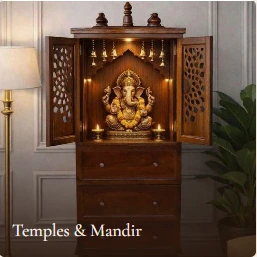
Why wood choice matters for a home mandir
A wooden mandir is different from ordinary decorative furniture. It may be opened and cleaned frequently, support idols and pooja accessories, include carved doors or jaali work, and be exposed to incense smoke, flowers, oils and occasional moisture from everyday cleaning.
That means the best wood for a pooja ghar should be chosen for durability, stability, carving requirements, maintenance and design, not colour alone.
Teak and sheesham are both widely used for Indian wooden mandirs. Contemporary buying guides consistently describe teak as the more premium moisture-resistant option and sheesham as a dense, richly grained hardwood particularly well suited to decorative carving.
Premium, stable and refined
Teak suits buyers looking for an heirloom-style mandir with warm grain, strong moisture resistance and comparatively straightforward maintenance.
- Natural oil content
- Good dimensional stability
- Strong moisture resistance
- Warm golden-brown appearance
- Suitable for premium carving
- Usually the more expensive option
Rich grain and carving character
Sheesham is a dense hardwood with strong visual grain and is particularly attractive for traditional mandirs with pillars, jaali work and ornate carved details.
- Dense and strong
- Distinctive natural grain
- Excellent decorative character
- Works well with detailed carving
- Usually more affordable than premium teak
- Benefits from good sealing and stable indoor conditions
Teak wood mandir vs sheesham wood mandir: complete comparison
| Factor | Teak Wood Mandir | Sheesham Wood Mandir |
|---|---|---|
| Durability | Excellent with suitable timber and construction | Very good when properly seasoned and maintained |
| Moisture resistance | Generally higher because of natural oils | Good indoors with suitable finishing |
| Appearance | Warm golden-to-medium brown, comparatively refined grain | Deeper tones with stronger grain contrast |
| Detailed carving | Suitable for premium architectural carving | Particularly attractive for ornate carving and jaali |
| Weight | Substantial solid-wood construction | Dense and often relatively heavy |
| Maintenance | Usually comparatively lower | Benefits from careful cleaning and surface protection |
| Relative price | Usually premium | Usually better value |
| Best suited to | Premium floor mandirs, heirloom designs, large custom units | Carved mandirs, traditional temples, decorative units |
When should you choose a teak wood mandir?
Teak is a strong choice when the mandir is intended to be a long-term furniture piece rather than a temporary pooja unit.
Its natural oils make it comparatively resistant to moisture, which can be useful where the mandir is cleaned frequently or installed in a humid environment.
Teak also works particularly well for larger floor-standing temples where clean timber grain, columns, doors and substantial structural members form part of the design.
When should you choose a sheesham wood mandir?
Sheesham can be an excellent choice where the design includes detailed ornamentation. Its pronounced grain works naturally with carved pillars, floral motifs, jaali side panels, arches and traditional temple forms.
It also tends to provide a more economical route to a genuine solid-hardwood mandir compared with premium teak. For a sheltered indoor pooja area, properly seasoned and finished sheesham can offer an excellent balance between craftsmanship, durability and cost.
Sheesham works especially well
Strong grain and dense timber can complement ornate pillars, jaali work, arches and decorative temple details.
Teak fits naturally
Clean lines and broad timber surfaces allow teak’s warm tone and grain to become part of the design.
Choose after designing
Final size, carving depth, storage and environment should help determine which timber is most appropriate.
Which lasts longer: teak or sheesham mandir?
Both are hardwoods capable of long service. Teak generally has the advantage in moisture resistance and stability, while sheesham remains a durable choice for indoor furniture and carved architectural work.
The bigger issue is often not the species name but the quality of the timber and manufacturing. Poorly seasoned wood can move or develop problems regardless of whether it is teak or sheesham.
Is teak more durable than sheesham for a mandir?
Teak generally has the advantage where moisture resistance and long-term dimensional stability are priorities. Sheesham is also strong and durable and can be an excellent long-term choice for an indoor pooja mandir when properly seasoned, constructed and finished.
Teak vs sheesham: which is better for a carved mandir?
Both woods can support carved designs, but their visual character is different.
Teak works particularly well where the carving needs to feel refined and the timber grain remains visible. Sheesham’s deeper colour variation and expressive grain can make traditional carved pillars, jaali work and decorative motifs appear more dramatic.
For a very detailed custom design, the final decision should also consider section thickness, carving depth and whether the mandir includes moving shutters, drawers or other joinery.
What is the best wood for a pooja ghar?
There is no single wood that is automatically best for every pooja ghar. The right choice depends on the size, design, environment and budget.
| Requirement | Suitable Direction | Reason |
|---|---|---|
| Premium heirloom mandir | Teak | Moisture resistance, refined grain and premium positioning |
| Highly carved traditional mandir | Sheesham or Teak | Both can support detailed carving with suitable timber |
| Better-value solid hardwood mandir | Sheesham | Usually lower material cost than premium teak |
| Large floor-standing temple | Teak or Sheesham | Choice should follow design, weight, carving and budget |
| Compact apartment mandir | Depends on size and mounting | Weight and available wall structure also matter |
Wooden temple for home price: what determines the cost?
Online prices for wooden mandirs vary enormously because a compact wall unit and a full-height carved temple are not comparable products.
Current Indian listings illustrate this spread: small sheesham mandirs can appear below ₹10,000, while larger made-to-order solid-wood mandirs can cost ₹30,000, ₹80,000 or much more depending on timber, size and craftsmanship. VAVA Woods therefore treats mandir pricing as a custom project rather than attaching one universal rate to every design.
Why teak mandirs usually cost more
Teak generally carries a higher raw-material cost than sheesham. The difference becomes more noticeable on a large mandir because the unit may use timber in the base, roof, pillars, side walls, shutters, shelves and decorative elements.
On a heavily carved design, however, labour can become just as important as material cost. A complex sheesham mandir with extensive carving may therefore cost more than a relatively simple teak design.
Is a sheesham mandir always cheaper than a teak mandir?
Not necessarily. Sheesham usually has a lower material cost than premium teak, but the final mandir price depends on size, carving, storage, doors, jaali, finish and labour. A highly ornate sheesham temple can cost more than a simple teak mandir.
Maintenance: teak mandir vs sheesham mandir
A home temple experiences a different kind of wear from ordinary furniture. Flowers, kumkum, oil, incense smoke, diya soot and frequent wiping can all affect the finish over time.
- Wipe dust with a soft dry or lightly damp cloth rather than soaking the wood.
- Clean oil or ghee spills promptly.
- Use a metal or stone diya tray below open flames.
- Keep flames away from wooden roof panels and carved surfaces.
- Avoid harsh household chemicals on polished timber.
- Maintain airflow if the mandir has closing doors.
- Inspect hinges and shutters periodically on larger mandirs.
- Refinish the surface when wear becomes visible rather than waiting for bare timber to become exposed.
Which wood looks better in a pooja room?
This is largely a design preference.
Teak generally suits lighter, refined and premium interiors. Its warm golden-brown appearance can work well with marble floors, neutral walls and contemporary villas.
Sheesham tends to create a richer, darker and more traditional visual effect. It works particularly well with carved temple forms and interiors that already use deeper wood tones.
What to send VAVA Woods for a custom mandir
VAVA Woods by RS Exports follows a made-to-order model for wooden mandirs, carved architectural pieces and other solid-wood requirements. For meaningful design and pricing, share the actual space and requirement rather than only asking for a generic teak or sheesham price.
- Available width, height & depth
- Floor-standing or wall-mounted
- Preferred teak / sheesham / hardwood
- Traditional or contemporary design
- Reference image or sketch
- Carving and jaali requirement
- Doors and drawer requirements
- Finish / polish preference
- Project / delivery location
Frequently asked questions about teak vs sheesham mandirs
Which wood is best for a pooja mandir?
Teak and sheesham are both strong solid-hardwood options. Teak is generally preferred when moisture resistance, premium appearance and lower maintenance are priorities, while sheesham is attractive for detailed carving, strong grain and better material value.
Is teak better than sheesham for a mandir?
Teak generally performs better where moisture resistance and long-term stability are priorities. Sheesham can still be an excellent long-lasting mandir wood for indoor use when properly seasoned, manufactured and finished.
Is sheesham wood good for a pooja mandir?
Yes. Sheesham is a dense hardwood with distinctive grain and is widely used for carved furniture and decorative woodwork. It is particularly suitable for traditional carved mandir designs.
Which wood is better for carved mandir designs?
Both teak and sheesham can be carved. Sheesham’s rich grain often complements ornate traditional work, while teak can produce refined premium carving with a lighter visual character.
How much does a wooden temple for home cost?
Prices vary widely with wood species, dimensions, carving, doors, storage, finish and craftsmanship. Compact wooden temples can cost a few thousand rupees, while large made-to-order solid-wood mandirs can cost tens of thousands or substantially more.
Is teak mandir more expensive than sheesham?
Teak usually has a higher material cost. However, the final price can change significantly with mandir size, carving depth, storage, doors, jaali work and finish.
Can VAVA Woods make a custom teak or sheesham mandir?
VAVA Woods follows a made-to-order approach. The dimensions, timber, carving, doors, storage and finish can be discussed according to the available space and project requirement.
Teak or sheesham? Start with your space and design.
Share the available dimensions, preferred style, reference image and project location with VAVA Woods. The suitable timber can then be evaluated together with the carving, storage, finish and budget.