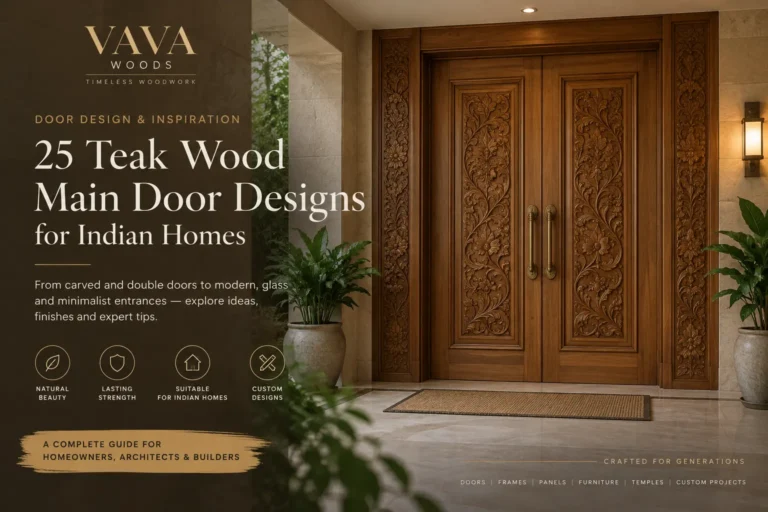
Teak vs Sheesham Doors: Which Wood Is Better for a Main Door?
Teak and sheesham are two hardwoods commonly considered for premium wooden doors in India. Both can create beautiful, long-lasting entrances—but they differ in moisture resistance, grain, maintenance, carving character and overall project cost.
Teak or sheesham: which is better for a main door?
Teak is generally the stronger choice for a premium external main door where moisture resistance, dimensional stability and lower maintenance are priorities. Sheesham is a strong, attractive hardwood that often offers better value and works especially well for sheltered entrances, decorative doors and carved woodwork. The right choice still depends on timber quality, seasoning, door design, exposure, finish and budget.
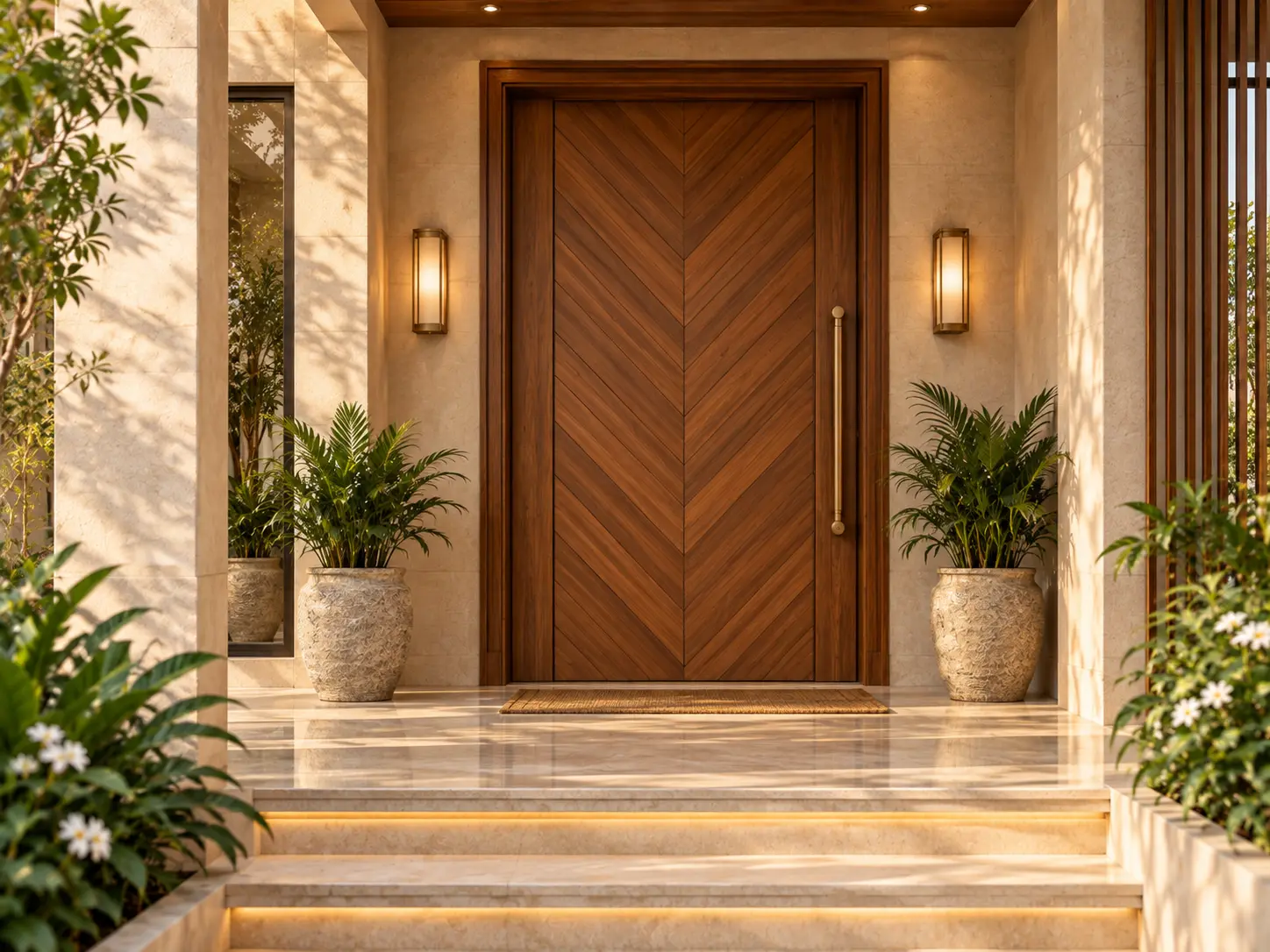
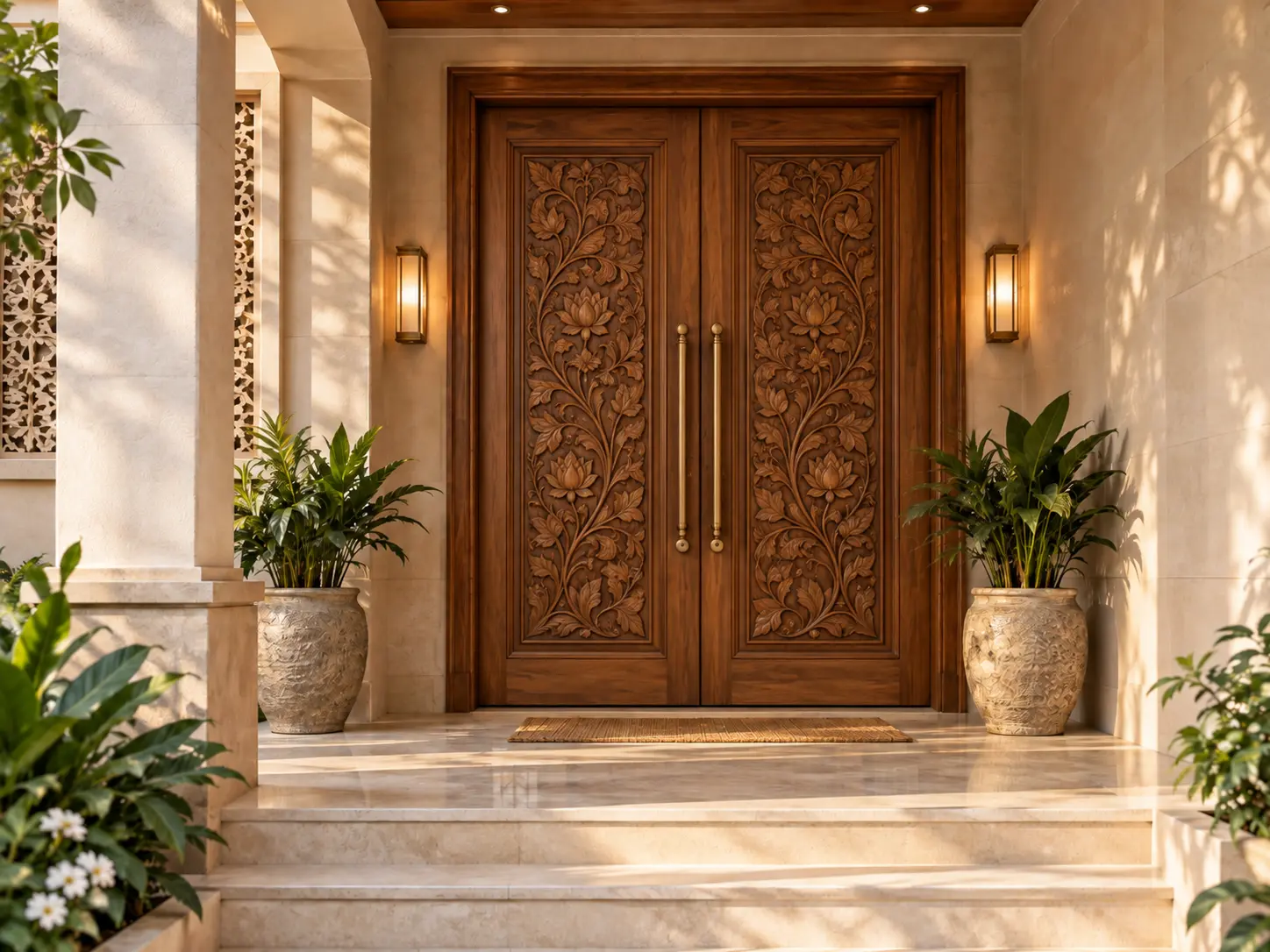
The door images in this guide are conceptual design visuals and should not be used to identify timber species from appearance alone. Final material, grain, colour and finish vary with the actual timber selected for a made-to-order VAVA Woods project.
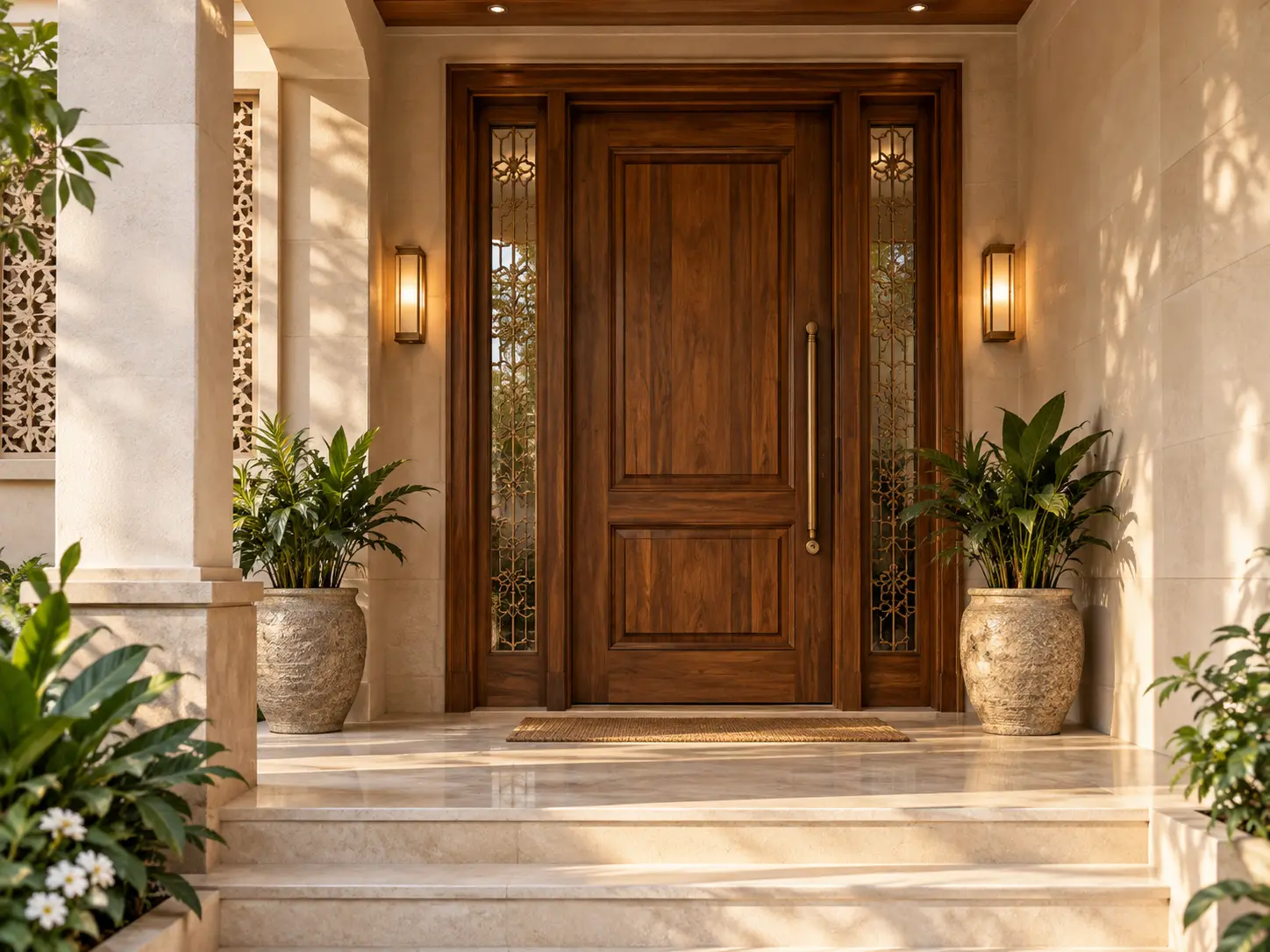
Teak vs sheesham: why the choice matters for a door
Choosing timber for a dining table and choosing timber for a main entrance are not exactly the same decision. A main door may experience frequent use, changing humidity, direct or indirect sunlight, dust and—in some installations— occasional rain.
That makes properties such as dimensional stability, moisture behaviour, timber quality, seasoning and surface protection important alongside appearance.
VAVA Woods follows a made-to-order approach, so the timber should ideally be selected together with the entrance design rather than after it. A contemporary panel door, a heavily carved double entrance and a decorative wooden chaukhat may each have different material and construction requirements.
Premium exterior-oriented option
Teak is valued for its natural oil content, warm appearance and relatively strong resistance to moisture.
- Strong choice for premium entrances
- Higher natural moisture resistance
- Generally lower maintenance
- Warm, comparatively restrained grain
- Usually higher material cost
Strong hardwood with expressive grain
Sheesham is dense, visually distinctive and frequently used for carved furniture and decorative architectural work.
- Strong and hard timber
- Distinctive grain patterns
- Excellent decorative character
- Usually better-value hardwood
- Benefits from careful moisture protection
Teak wood door vs sheesham wood door: complete comparison
| Factor | Teak Wood Door | Sheesham Wood Door |
|---|---|---|
| Durability | Excellent when quality timber and construction are used | High durability when properly seasoned and maintained |
| Moisture resistance | Generally higher because of natural oils | Good for suitable applications but needs effective sealing |
| Dimensional stability | Generally very good | Good when timber is correctly seasoned |
| Appearance | Warm golden-to-brown tone with relatively refined grain | Rich colour with more dramatic grain variation |
| Carving | Suitable for premium architectural carving | Popular for detailed decorative and carved work |
| Maintenance | Usually comparatively lower | May require more attention to surface protection |
| Relative material cost | Generally higher | Generally more economical |
| Typical door use | Main entrances, luxury villas, premium external doors | Carved doors, sheltered entrances, interior woodwork and frames |
What is teak wood?
Teak is a tropical hardwood recognised for its warm colour, visible grain and natural oil content. Those oils contribute to teak’s reputation for resistance to moisture and environmental exposure.
That makes teak especially relevant when discussing the best wood for a main door, because external entrance shutters may experience humidity, changing weather and sunlight.
Teak also works with very different design languages—from clean contemporary panels and chevron entrances to traditional carved double doors.
What is sheesham wood?
Sheesham, often called Indian rosewood, is a dense hardwood associated with strong grain variation and decorative character.
Its hardness and visual grain make it particularly attractive for carved wooden doors, furniture, frames and architectural detailing. In many projects it also provides a more economical route to genuine solid hardwood than premium teak.
For exterior or humidity-exposed applications, proper seasoning, finishing and ongoing moisture protection become especially important.
Sheesham vs teak durability: which lasts longer?
Both teak and sheesham are genuine hardwoods capable of long service, so it is misleading to describe one as durable and the other as weak.
The practical difference is that teak generally offers stronger inherent resistance to moisture because of its natural oil content. That is particularly relevant in humid locations or where a main entrance has greater exposure.
Sheesham is also strong and dense, but its performance becomes more dependent on proper seasoning, good joinery, sealing and maintenance when humidity changes significantly.
Which is more durable: teak or sheesham?
For moisture-exposed entrance applications, teak usually has the durability advantage. For sheltered and indoor applications, properly seasoned and finished sheesham can also provide excellent long-term performance. Construction quality matters as much as the species name.
Which is the best wood for a main door?
If the question is specifically about a premium external main entrance, teak is often the safer default because moisture resistance and dimensional stability are particularly valuable at the building envelope.
But there are situations where sheesham can make excellent sense—for example, a sheltered entrance where carving, grain character and overall budget matter more than maximum exposure resistance.
Teak usually fits best
Useful where moisture resistance, longevity and reduced maintenance justify a higher timber budget.
Teak or sheesham
Design, grain character, carving requirements and budget can play a larger role when weather exposure is limited.
Both are viable
Timber grade, carving depth, shutter dimensions and final application should guide the material decision.
Teak vs sheesham for carved wooden doors
A carved door places different demands on timber than a plain panel entrance. Deep-relief temple carving, a floral chaukhat and shallow geometric detailing all behave differently during manufacturing.
Sheesham’s density and distinctive grain make it popular for decorative carving. Teak can combine premium carving with the additional moisture resistance expected from a high-value external entrance.
With VAVA Woods, the starting point can be your architectural requirement, elevation or inspiration image. You can explore VAVA Woods door and carved-woodwork concepts before discussing the most suitable material.
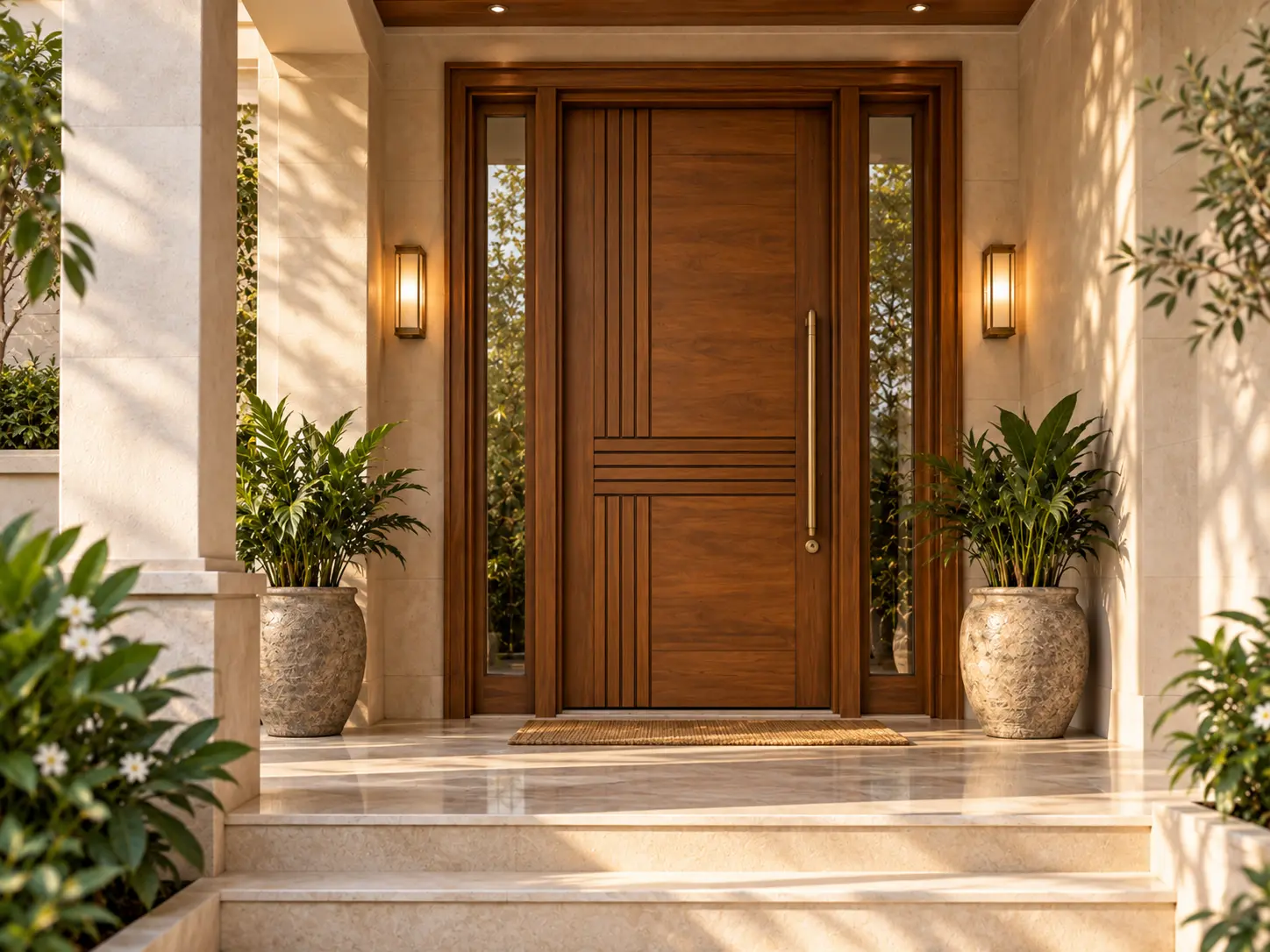
Teak vs sheesham appearance: what is the visual difference?
Teak is commonly associated with warm golden-to-medium brown tones and a comparatively balanced grain. That makes it particularly easy to integrate into contemporary entrance designs where the geometry should remain visually clean.
Sheesham often has stronger grain contrast and deeper tonal variation. Depending on the actual timber, this can give carved and traditional work a more expressive handcrafted character.
Natural variation is part of working with real solid wood. A final manufactured door will not necessarily have exactly the grain or colour shown in any concept image.
Solid wood door price: what actually determines the cost?
Teak generally carries a higher material price than sheesham, but wood species alone is not enough to price a custom solid wood door.
Current published Indian estimates vary widely because a plain solid-wood shutter and an elaborate carved double entrance are completely different products. VAVA Woods therefore uses a project-pricing model rather than treating every door as a fixed retail SKU.
Is teak always worth paying more for?
No. Paying more for teak makes sense when its particular advantages matter to the application.
For an exposed villa entrance or premium architectural feature expected to perform for many years, teak’s moisture resistance may justify the higher material spend.
For a sheltered decorative door, interior feature or carved application, well-selected sheesham may achieve the required design and durability while using the project budget more efficiently.
Teak door vs sheesham door maintenance
| Maintenance Issue | Teak | Sheesham |
|---|---|---|
| Humidity | Generally handles it better | Benefits from stronger surface protection |
| Regular polishing | Depends on finish and desired appearance | May require somewhat more attention |
| Direct rain | Still requires suitable exterior finishing | Should generally be well sheltered and sealed |
| Sun exposure | Finish can still fade or weather | Finish can also change with prolonged UV exposure |
| Inspection | Check polish, hardware, joints and water exposure periodically regardless of timber species. | |
What should you ask before ordering a solid wood door?
A buyer should ask more than simply “Is this teak?” or “Is this sheesham?”. Door performance depends on the complete specification.
What species and grade?
Clarify the actual timber specification rather than relying only on a colour or finish name.
Has the wood been seasoned?
Moisture control before manufacturing has a major influence on future movement and stability.
How will the door be built?
Ask about shutter thickness, frame, joinery, carving, hardware and installation expectations.
For architects, builders, hotels and project buyers
When comparing teak and sheesham for a project, avoid asking only for “price per door”. A useful project quotation should be based on an actual door schedule or specification.
VAVA Woods by RS Exports works on made-to-order wooden doors, frames, chaukhat, carved panels and architectural woodwork for residential, hospitality and project requirements.
- Finished opening dimensions
- Single or double shutter
- Total quantity / BOQ
- Preferred timber
- Carving or panel design
- Chaukhat requirement
- Finish specification
- Hardware requirements
- Project / delivery location
Teak vs sheesham: final decision
Choose teak when…
The door is a premium external main entrance, greater moisture resistance matters, maintenance should be comparatively low, and the project budget supports a premium timber specification.
Choose sheesham when…
You want genuine hardwood with strong grain and carving character, the entrance is reasonably protected from direct weather, and material value is an important part of the project decision.
In either case, timber quality and manufacturing quality matter. A well-designed door made from properly selected and seasoned timber is a more useful investment than choosing a species name without considering the rest of the specification.
Frequently asked questions about teak vs sheesham doors
Is teak better than sheesham for a main door?
Teak is generally preferred for a premium exterior main door because its natural oils give it stronger moisture resistance. Sheesham can still be an excellent choice for a sheltered main entrance when the timber is properly seasoned, constructed and finished.
Which is more durable, teak or sheesham?
Both are durable hardwoods. Teak generally has the advantage where moisture and environmental exposure are important, while sheesham is dense, hard and capable of long service in appropriate applications.
Which is more expensive, teak or sheesham?
Teak usually costs more than sheesham. However, a finished solid wood door price also depends on timber grade, dimensions, thickness, carving, chaukhat, hardware, finish and order quantity.
Is sheesham good for carved wooden doors?
Yes. Sheesham is widely used for decorative furniture and carved architectural work because of its density and distinctive grain. Suitability for a particular door depends on timber quality, seasoning, dimensions and carving depth.
Does teak require no maintenance?
No wooden external door is completely maintenance-free. Teak generally requires less intervention than many hardwoods, but its surface finish can still change under prolonged sun, rain and everyday use.
Can VAVA Woods make doors in both teak and sheesham?
VAVA Woods works on made-to-order wooden doors and architectural woodwork. The suitable wood can be discussed according to the design, exposure, dimensions, carving, finish, availability and project budget.
Not sure whether to choose teak or sheesham?
Share your door dimensions, design reference, quantity and project location with VAVA Woods. The timber choice can then be evaluated together with the design, carving, finish and manufacturing requirement.